

| Revision for Dragonfly Planetary Nebula | ||
| Previous Revision, by CMDR Marx [2026-02-26 12:27:29] | → | Selected revision, by LCU No Fool Like One [2026-02-26 12:38:22] |
| DISCOVERER | ||
| → | Alesia | |
| NAME | ||
| Dragonfly planetary nebula | → | Dragonfly Planetary Nebula |
| SYSTEMNAME | ||
| Eoch Flyuae UU-O e6-2971 | → | Eoch Flyuae UU-O e6-2971 |
| CATEGORY | ||
| Nebulae | → | Nebulae |
| CATEGORY 2 | ||
| → | ||
| REGION | ||
| Inner Scutum-Centaurus Arm | → | Inner Scutum-Centaurus Arm |
| LATITUDE | ||
| → | ||
| LONGITUDE | ||
| → | ||
| CALLSIGN | ||
| → | ||
| SUMMARY | ||
| A colourful nebula with a high mass neutron star as its heart. | → | A colourful nebula with a high mass neutron star as its heart. |
| DESCRIPTION | ||
| → | ||
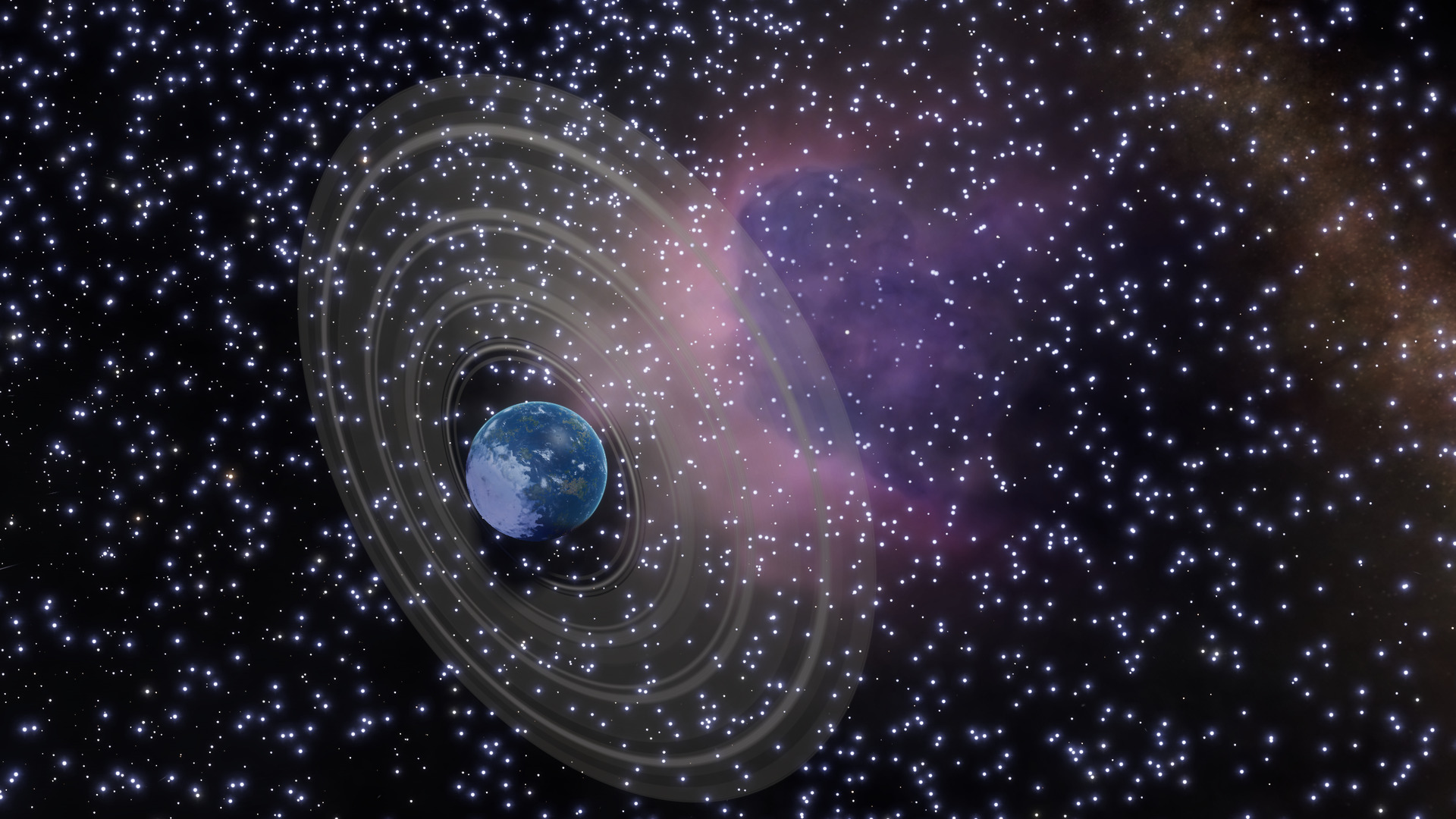
The Dragonfly Nebula is a tiny planetary nebula with a neutron star as its heart. Like most such nebulae, there is not really much to see from inside and the only object of interest in the system is a water world. However, there are plenty of systems nearby from which you can get a good view, such as from the rings of the Earth-like world at Eoch Flyuae SV-B d14-8835.
At over 2.5 solar masses, this neutron star is close to the TOV limit, the upper mass limit over which it would collapse into a black hole. It is also still outside its Schwarzschild radius, which is the radial limit to the same collapse. Also, there is not enough mass in the system to tip it over into a black hole if it were all to fall to the surface of the star, so the nebula is safe for now. | → | The Dragonfly Nebula is a tiny planetary nebula with a neutron star as its heart. Like most such nebulae, there is not really much to see from inside and the only object of interest in the system is a water world. However, there are plenty of systems nearby from which you can get a good view, such as from the rings of the Earth-like world at Eoch Flyuae SV-B d14-8835.
At over 2.5 solar masses, this neutron star is close to the TOV limit, the upper mass limit over which it would collapse into a black hole. It is also still outside its Schwarzschild radius, which is the radial limit to the same collapse. Also, there is not enough mass in the system to tip it over into a black hole if it were all to fall to the surface of the star, so the nebula is safe for now. |
| JOURNAL | ||
| → | ||
| OBSERVATORY | ||
| → | ||