

| Revision for Arcadia's Shadow | ||
| Previous Revision, by CMDR Marx [2026-01-31 21:34:52] | → | Selected revision, by CMDR Marx [2026-02-02 17:02:09] |
| DISCOVERER | ||
| Kailoren | → | Kailoren |
| NAME | ||
| Arcadia's Shadow | → | Arcadia's Shadow |
| SYSTEMNAME | ||
| Roedaae JO-G a10-1 | → | Roedaae JO-G a10-1 |
| CATEGORY | ||
| Notable Stellar Phenomena | → | Notable Stellar Phenomena |
| CATEGORY 2 | ||
| → | ||
| REGION | ||
| Arcadian Stream | → | Arcadian Stream |
| LATITUDE | ||
| → | ||
| LONGITUDE | ||
| → | ||
| CALLSIGN | ||
| → | ||
| SUMMARY | ||
| A storm cloud housing Lividum Bullet Molluscs, the first such NSP in this galactic region. | → | A storm cloud housing Lividum Bullet Molluscs, the first such NSP in this galactic region. |
| DESCRIPTION | ||
| → | ||
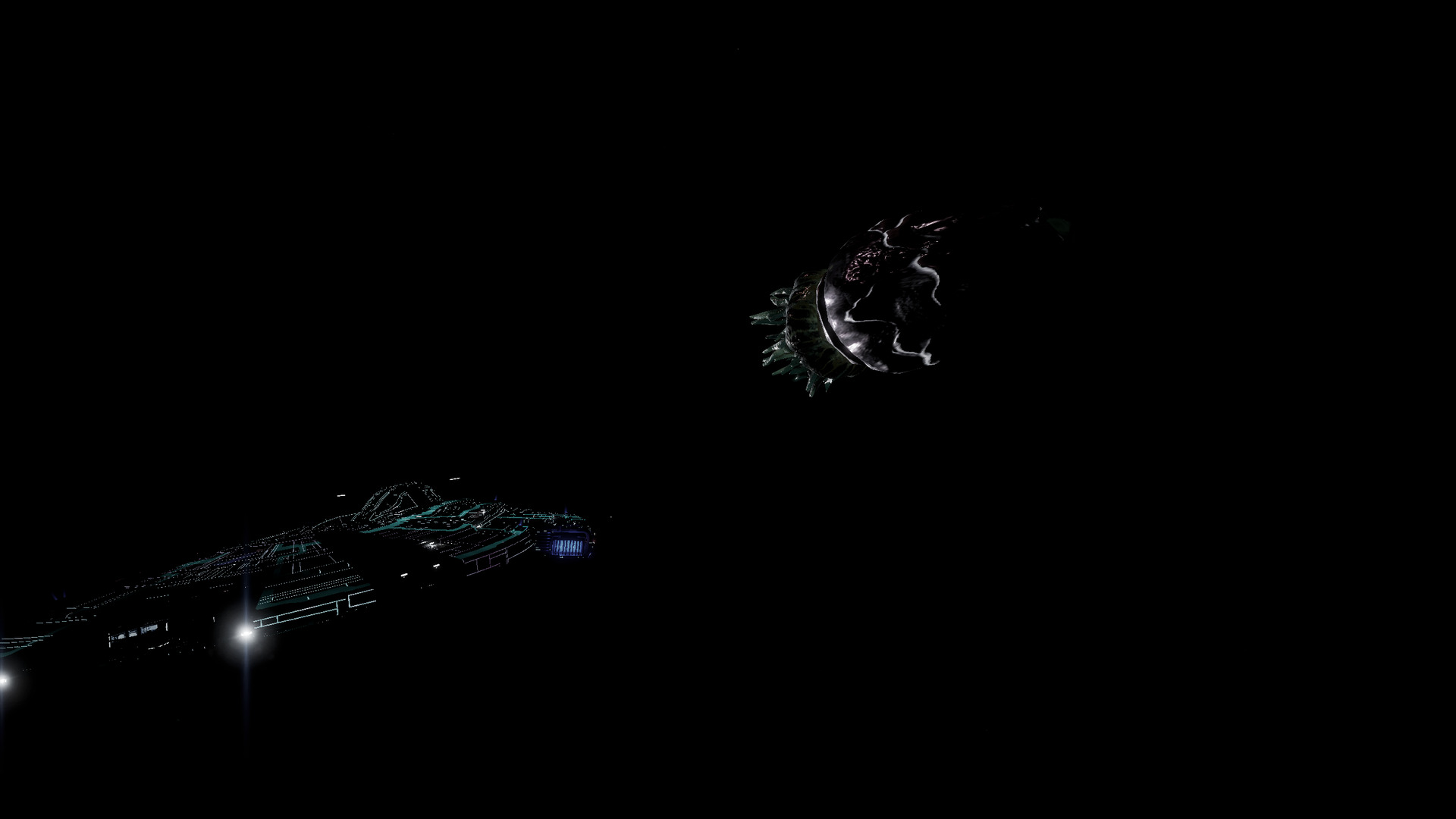
The only star in this system is a class T brown dwarf star that's 13,055 million years old, and as such, its light is faint and does not illuminate much of the system. Couple this with the Luteolum Lagrange storm cloud being located on the far side of Body 4 a means it is almost in complete darkness. The flashes of lightning within the storm cloud give but a fleeting moment of clarity for what lurks around you, before plummeting you back into the complete darkness of space, your ship thrown violently around by the storm. It is for this reason that the name Arcadia's Shadow was chosen for this POI, after the Arcadia mountain range in Greece, to symbolise the sprawling expanse of the region it is located in. The first Notable Stellar Phenomena of this galactic region were discovered here. A lone point in the vast region engulfed in darkness with no bearing on your surroundings, completely at the mercy of the storm encompassing you, this place is not for the faint hearted explorer. The storm cloud harbors Lividum Bullet Molluscs. Unlike many other species of bullet molluscs, the Lividum species does not drain ships' shields. Instead, these creatures drift through the storm, stopping only when they are illuminated by ships' headlights.
This system was discovered during the Distant Worlds 3 expedition, in 3312. | → | The only star in this system is a class T brown dwarf star that's 13,055 million years old, and as such, its light is faint and does not illuminate much of the system. Couple this with the Luteolum Lagrange storm cloud being located on the far side of Body 4 means it is almost in complete darkness. The flashes of lightning within the storm cloud give but a fleeting moment of clarity for what lurks around you, before plummeting you back into the complete darkness of space, your ship thrown violently around by the storm. It is for this reason that the name Arcadia's Shadow was chosen for this POI, after the Arcadia mountain range in Greece, to symbolise the sprawling expanse of the region it is located in. The first Notable Stellar Phenomena of this galactic region were discovered here. A lone point in the vast region engulfed in darkness with no bearing on your surroundings, completely at the mercy of the storm encompassing you, this place is not for the faint hearted explorer. The storm cloud harbors Lividum Bullet Molluscs. Unlike many other species of bullet molluscs, the Lividum species does not drain ships' shields. Instead, these creatures drift through the storm, stopping only when they are illuminated by ships' headlights.
This system was discovered during the Distant Worlds 3 expedition, in 3312. |
| JOURNAL | ||
| → | ||
| OBSERVATORY | ||
| → | ||