

| Revision for Matryoshka | ||||||||||||||||||||||||||||||||||||
| Previous Revision, by PhoenixBlue [2026-01-20 10:05:29] | → | Selected revision, by PhoenixBlue [2026-01-21 01:44:07] | ||||||||||||||||||||||||||||||||||
| DISCOVERER | ||||||||||||||||||||||||||||||||||||
| Regza | → | Regza | ||||||||||||||||||||||||||||||||||
| NAME | ||||||||||||||||||||||||||||||||||||
| Matryoshka | → | Matryoshka | ||||||||||||||||||||||||||||||||||
| SYSTEMNAME | ||||||||||||||||||||||||||||||||||||
| Eoch Flyuae YK-K c10-56 | → | Eoch Flyuae YK-K c10-56 | ||||||||||||||||||||||||||||||||||
| CATEGORY | ||||||||||||||||||||||||||||||||||||
| Planetary Features | → | Planetary Features | ||||||||||||||||||||||||||||||||||
| CATEGORY 2 | ||||||||||||||||||||||||||||||||||||
| Sights and Scenery | → | Sights and Scenery | ||||||||||||||||||||||||||||||||||
| REGION | ||||||||||||||||||||||||||||||||||||
| Inner Scutum-Centaurus Arm | → | Inner Scutum-Centaurus Arm | ||||||||||||||||||||||||||||||||||
| LATITUDE | ||||||||||||||||||||||||||||||||||||
| → | ||||||||||||||||||||||||||||||||||||
| LONGITUDE | ||||||||||||||||||||||||||||||||||||
| → | ||||||||||||||||||||||||||||||||||||
| CALLSIGN | ||||||||||||||||||||||||||||||||||||
| → | ||||||||||||||||||||||||||||||||||||
| SUMMARY | ||||||||||||||||||||||||||||||||||||
| A very unusual system with three bodies that regularly collide, sometimes simultaneously. | → | A very unusual system with three bodies that regularly collide, sometimes simultaneously. | ||||||||||||||||||||||||||||||||||
| DESCRIPTION | ||||||||||||||||||||||||||||||||||||
| → | ||||||||||||||||||||||||||||||||||||
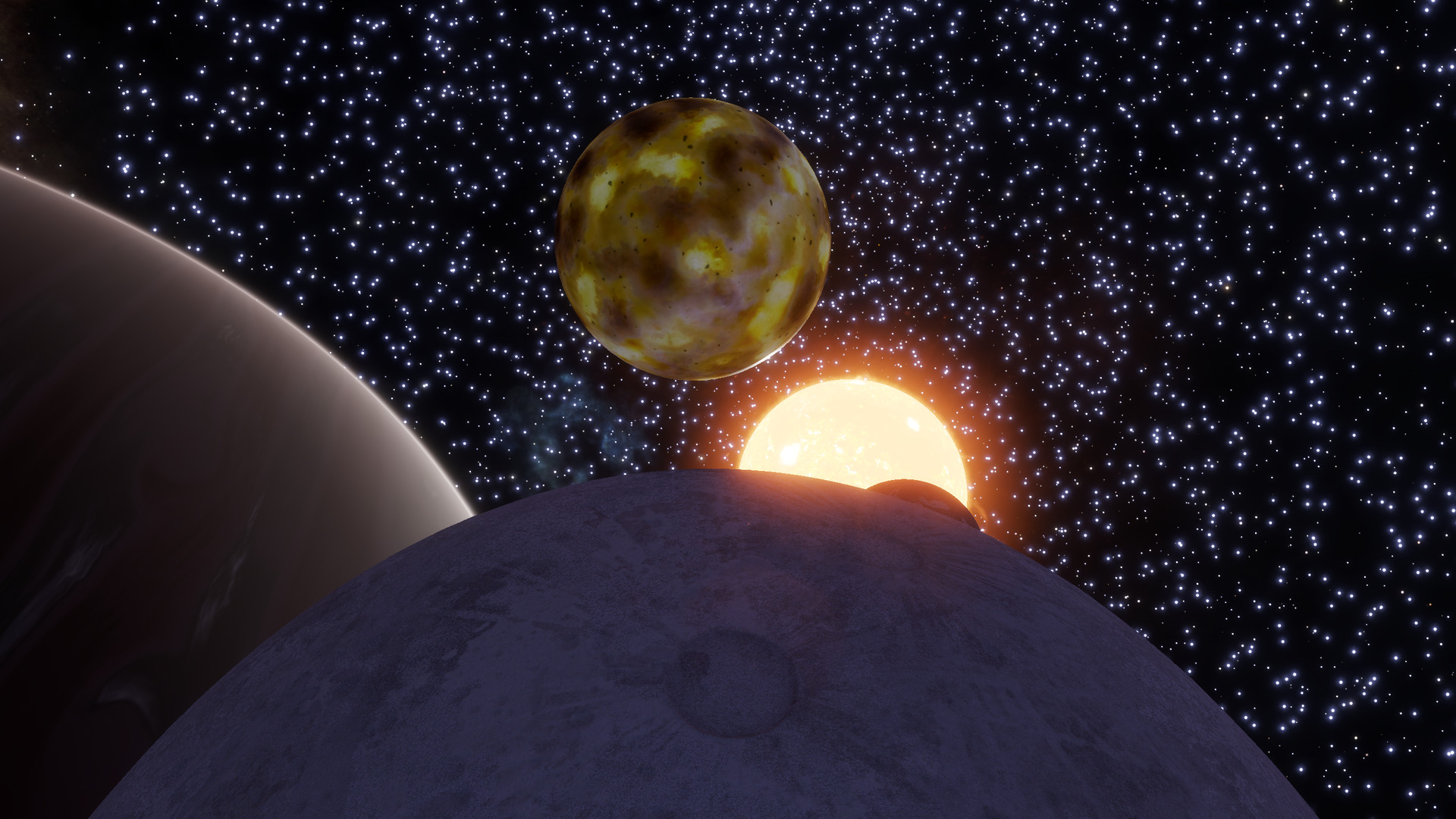
A Matryoshka, or Russian nesting doll, is a set of wooden dolls of decreasing size placed one inside another. It seems an appropriate name for a system containing three moons of a gas giant that regularly collide, and on occasion collide simultaneously. The system was first visited by Commander Noobdoge, but Commander Regza first discovered the significance of the orbital data and drew the galaxy's attention to this backwater system. The three moons of the ringed Class IV gas giant Eoch Flyuae YK-K c10-56 1 orbit very closely, approximately 13,000 km from the surface of their parent. Planet 2, a landable high metal content world, also orbits very closely, at a distance from the surface barely different from the radius of the gas giant. The barycentre is only 800 km above the surface. This makes for a very crowded part of the system, with fast-moving bodies.
The gas giant has two very thin rings, just 4 and 5 km in width. They are invisible and unscannable, though this is not really surprising considering that the rings must pass through bodies 1 b and 1 c.
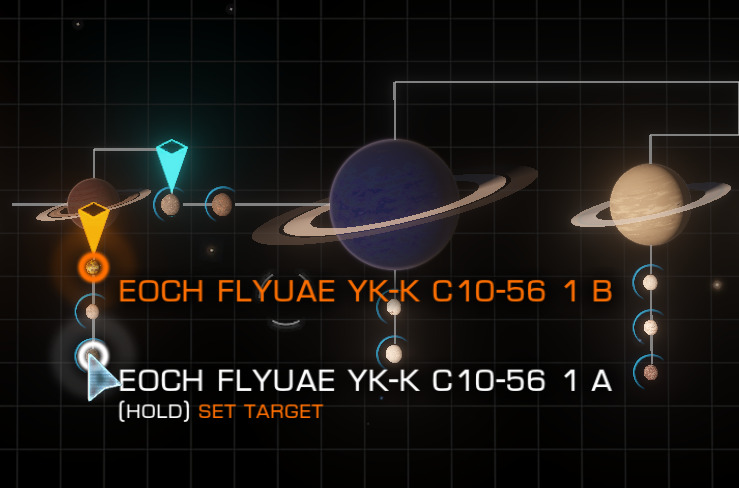
Another unusual aspect of these moons is that their nomenclature does not match their orbital positions. Body 1 b is closest to the gas giant, followed by 1 c, with 1 a being the furthest away. The orbital inclinations of the three moons differ by only 6 degrees. Their orbits are very nearly circular, and the difference between their semi-major axes is less than their combined radii, meaning they are guaranteed to collide on every orbit.
Triple collisions with all three bodies colliding simultaneously are not as frequent.
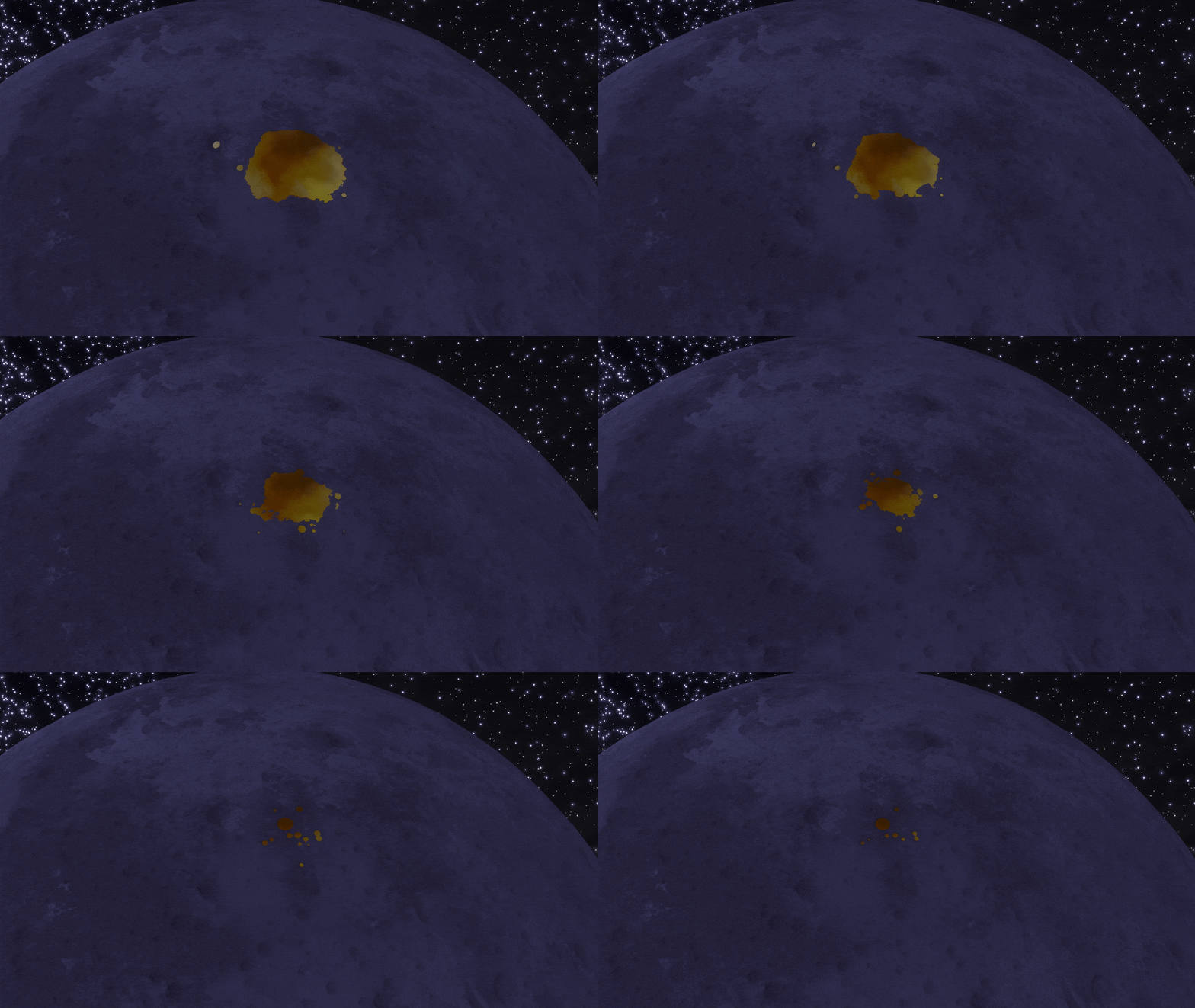
After 3313, the next collsion will be in 3316. Planet 1 b has a sulphur dioxide atmosphere, and when it collided in early 3311 it marked the first observation of a planet with a thick atmosphere colliding with a landable body. Observers were shocked to see the planet vanish completely from sight until it re-emerged a short while later.
| → | A Matryoshka, or Russian nesting doll, is a set of wooden dolls of decreasing size placed one inside another. It seems an appropriate name for a system containing three moons of a gas giant that regularly collide, and on occasion collide simultaneously. The system was first visited by Commander Noobdoge, but Commander Regza first discovered the significance of the orbital data and drew the galaxy's attention to this backwater system. The three moons of the ringed Class IV gas giant Eoch Flyuae YK-K c10-56 1 orbit very closely, approximately 13,000 km from the surface of their parent. Planet 2, a landable high metal content world, also orbits very closely, at a distance from the surface barely different from the radius of the gas giant. The barycentre is only 800 km above the surface. This makes for a very crowded part of the system, with fast-moving bodies.
The gas giant has two very thin rings, just 4 and 5 km in width. They are invisible and unscannable, though this is not really surprising considering that the rings must pass through bodies 1 b and 1 c.
Another unusual aspect of these moons is that their nomenclature does not match their orbital positions. Body 1 b is closest to the gas giant, followed by 1 c, with 1 a being the furthest away. The orbital inclinations of the three moons differ by only 6 degrees. Their orbits are very nearly circular, and the difference between their semi-major axes is less than their combined radii, meaning they are guaranteed to collide on every orbit.
Triple collisions with all three bodies colliding simultaneously are not as frequent.
After 2027, the next collsion will be in 2030. Planet 1 b has a sulphur dioxide atmosphere, and when it collided in early 3311 it marked the first observation of a planet with a thick atmosphere colliding with a landable body. Observers were shocked to see the planet vanish completely from sight until it re-emerged a short while later.
| ||||||||||||||||||||||||||||||||||
| JOURNAL | ||||||||||||||||||||||||||||||||||||
| → | ||||||||||||||||||||||||||||||||||||
| OBSERVATORY | ||||||||||||||||||||||||||||||||||||
| → | ||||||||||||||||||||||||||||||||||||